



Understanding Oxzep7 and Its Importance
upgrade oxzep7 python is an influential framework within the Python programming ecosystem, designed to provide streamlined functionalities and tools that enhance the development and execution of Python applications. As a robust framework, Oxzep7 facilitates developers in optimizing their coding processes, making it an invaluable resource for both new and experienced programmers. Known for its versatile components, Oxzep7 supports a variety of applications ranging from web development and data analysis to machine learning projects.
One of the pivotal features of upgrade oxzep7 python its modular architecture, which allows for the easy integration of additional functionalities tailored to specific project needs. This modularity not only accelerates the development cycle but also encourages best practices in code organization. For instance, many developers have successfully leveraged Oxzep7 for automating repetitive tasks, which significantly enhances productivity and reduces potential errors associated with manual coding.
Moreover, upgrade oxzep7 python fosters a dynamic community of users who contribute to its ecosystem by sharing plugins and libraries, making it easier for developers to build upon one another’s work. This collaborative environment is critical for the continuous improvement and innovation of the framework, ensuring that it remains relevant in a fast-paced technology landscape.
Keeping Oxzep7 updated is essential for ensuring optimal performance, enhanced security, and the latest features. Software updates often include patches for vulnerabilities and improvements that help in maintaining a secure coding environment. Furthermore, new features introduced in the latest versions can significantly expand the capabilities of existing projects, making it crucial for developers to regularly upgrade Oxzep7 Python to benefit from these advancements.
Prerequisites for Upgrading Oxzep7 Python
Before embarking on the task of upgrading Oxzep7 Python, it is essential to ensure that certain prerequisites are met. The first step involves checking the current version of Oxzep7 installed on your system. You can do this by executing the command oxzep7 --version in your terminal or command prompt. Knowing your current version is crucial as it will help you determine whether an upgrade is necessary.
Next, verify that you have Python installed on your system upgrade oxzep7 python requires a compatible version of Python to function correctly post-upgrade. It is recommended to use Python 3.7 or higher for optimal performance of Oxzep7. If your version of Python is outdated, you will need to upgrade it to meet the compatibility requirements.
In addition to checking your Python installation, it is also important to confirm that your operating system meets the necessary system requirements. Ensure that your operating system is adequately updated and that it supports the version of Oxzep7 Python you plan to install. This may vary depending on whether you’re using Windows, macOS, or Linux.
Another critical step before proceeding with the upgrade is to back up your current projects. This precaution is vital to prevent any potential data loss during the upgrade process. Make sure to save copies of your important files and configurations upgrade oxzep7 python so that they can be restored if something does not go as planned.
By following these prerequisites, you can set up a solid foundation before you initiate the upgrade of Oxzep7 Python, ensuring a smoother transition to the new version without unexpected issues.
Step-by-Step Guide to Upgrade Oxzep7 Python
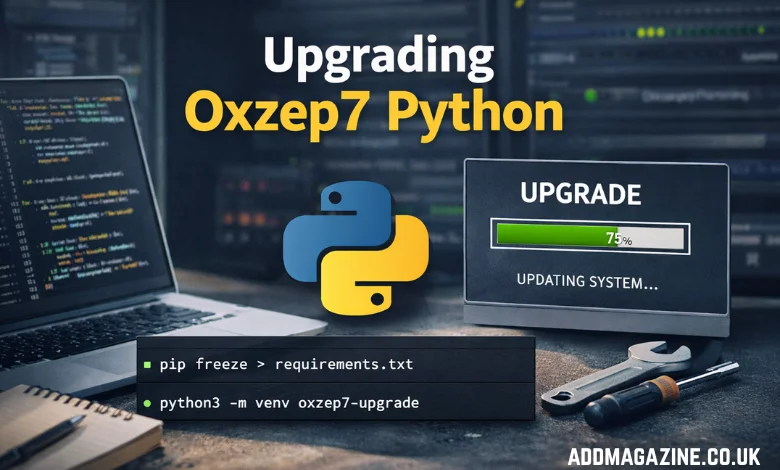
Upgrading Oxzep7 Python can be a straightforward process if you follow the steps outlined in this guide. The procedure differs slightly depending on the operating system you are using: Windows, macOS, or Linux. Below, we break down the upgrade process for each system.
For Windows: Open the Command Prompt by searching for it in the Start Menu. After that, execute the following command:
pip install --upgrade oxzep7
This command will identify any available updates for Oxzep7 and install them. Ensure that you have administrator privileges, or you may run into permission-related issues.
For macOS: Open Terminal and enter the same command:
pip install --upgrade oxzep7
If you encounter permission issues, prepend the command with sudo to grant elevated privileges:
sudo pip install --upgrade oxzep7
You will be prompted to enter your password to authorize the action.
For Linux: The upgrade process in Linux is quite similar to macOS. Open your terminal and run:
pip install --upgrade oxzep7
As with macOS, you may use sudo if you encounter permission issues. If dependencies need to be updated, they will also be handled automatically during the upgrade process.
Troubleshooting: If you experience issues during the upgrade, check your Python and pip versions with:
python --version
pip --version
Ensuring that both are up to date is crucial for a smooth upgrade. Additionally, use the --user flag if you do not have permission to install globally:
pip install --upgrade --user oxzep7
Verification: Once the command completes, verify the successful upgrade by checking the installed version:
pip show oxzep7
upgrade oxzep7 python This command will display the current version, allowing you to confirm that the upgrade was completed successfully.
Post-Upgrade Tips and Best Practices
Once you have successfully upgraded oxzep7 python, it is imperative to follow certain best practices to ensure that your applications continue to function optimally. Begin by testing all existing applications to confirm that they operate correctly under the new version. Implementing a comprehensive testing strategy, including unit tests and integration tests, will help identify potential issues that may arise from the upgrade.
Moreover, take the time to explore the new features and improvements offered by the upgraded version of upgrade oxzep7 python. Familiarizing yourself with enhancements can significantly improve your development process and open up new capabilities for your applications. Document these new features to ensure that your team or any stakeholders are aware of the advantages that come with the upgrade.
Establishing a regular maintenance schedule is another critical component of successful application management post-upgrade. This could involve routinely checking for further updates, maintaining your dependencies, and optimizing performance based on user feedback or monitoring tools. With an upgraded version of oxzep7 python, you may find that certain libraries or tools can be improved upon for better efficiency.
Furthermore, consider implementing performance optimization techniques, such as reviewing your codebase for areas needing improvement or exploring caching strategies to enhance application speed. Utilizing profiling tools can aid in pinpointing bottlenecks and encourage a more efficient runtime environment.
To assist with ongoing management, it is prudent to curate resources that can support your maintenance regime, including documentation, tutorials, and community forums focused on oxzep7 python. These resources will not only help you upgrade oxzep7 python troubleshoot issues but also keep you informed about best practices and emerging trends.

