



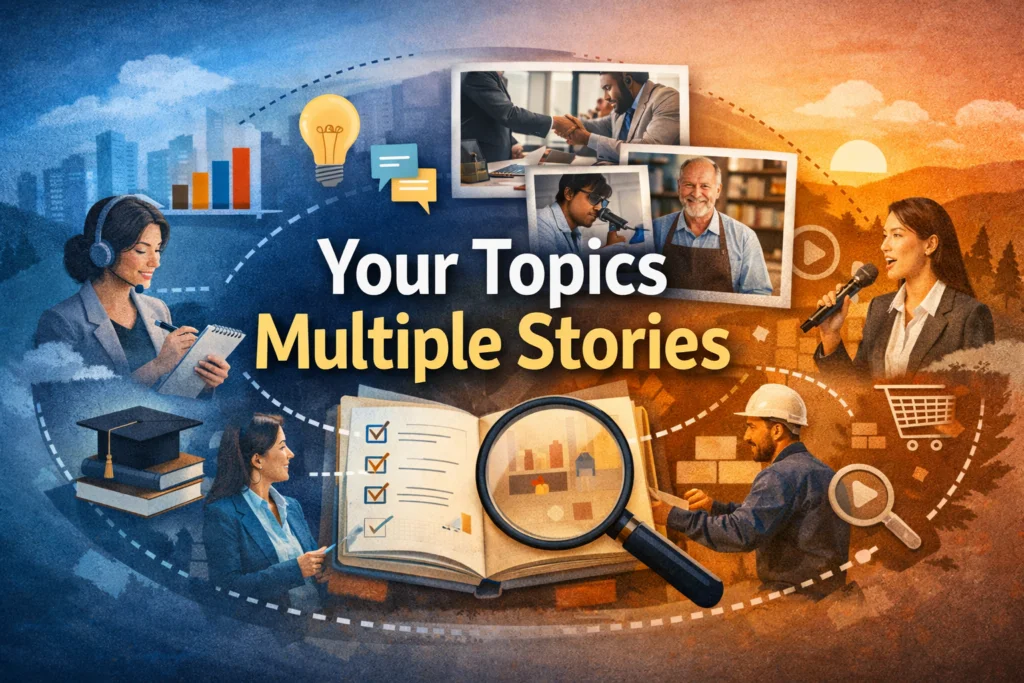
Understanding the Concept of Your Topics | Multiple Stories
The concept of ‘your topics | multiple stories’ refers to the practice of interlinking diverse narratives around a common theme, ultimately enriching the content landscape. This multifaceted approach not only spruces up the storytelling framework but also allows creators to explore various angles of a subject matter, thereby engaging audiences at a deeper level. In essence, it entails drawing upon different experiences, perspectives, and insights that revolve around a central idea, which can captivate and retain the audience’s attention.
Each story, while distinct, contributes to a larger narrative tapestry. The concept of ‘your topics | multiple stories For instance, if the central theme pertains to environmental conservation, one narrative might delve into the personal experiences of individuals fighting against pollution, while another could focus on scientific innovations aimed at sustainability. This array of stories not only adds depth but also provides an opportunity to highlight various facets of an issue, addressing the multifarious interests of audiences across the digital landscape.

The importance of this narrative structure in content creation cannot be overstated. In today’s fast-paced information age, where audiences are bombarded with vast amounts of content, uniquely curated stories can differentiate media offerings and foster deeper emotional connections with readers. Engaging The concept of ‘your topics | multiple stories narratives that revolve around a theme enhance relatability and investment, encouraging individuals to not only consume content but also to share it within their networks.
The concept of ‘your topics | multiple stories | multiple stories’ serves as a powerful strategy for content creators aiming to enrich their contributions. By interweaving diverse tales linked to a unified subject, content becomes more engaging, insightful, and relevant, which ultimately helps capture and retain audience attention in a crowded digital arena.
Finding Your Unique Angle: Crafting Stories that Resonate
Identifying a unique angle for your topics is crucial in crafting narratives that resonate with your audience. The process begins with brainstorming, an essential technique for generating ideas. Start by listing all associated themes and concepts related to your primary topic. This may include personal experiences, historical context, or relevant trends. Once you have a comprehensive list, assess which themes stand out as intriguing or underexplored.
The concept of ‘your topics | multiple stories mind mapping can be an effective method to visualize these connections. By drawing links between various ideas, writers can uncover unique perspectives that may not be immediately apparent. Another useful approach is the ‘5 Whys’ technique, which involves asking why a certain narrative is important at least five times. This not only deepens the understanding of the narrative’s significance but also helps in honing in on a compelling angle.
Moreover, consider the target audience’s interests and needs. Each audience will have distinct preferences that can guide the crafting of your story. Conducting surveys or engaging in social listening can provide insights into what potential readers are searching for. The concept of ‘your topics | multiple stories Look for common questions or conversations within your niche community. By addressing these queries, you integrate an angle that not only brings a fresh perspective but also adds value to your audience.
For instance, successful content creators like Malcolm Gladwell have excelled by framing ordinary topics through a unique lens, often using statistical data to create compelling narratives in a multi-story format. Similarly, stories that draw from diverse sources or personal insights can enrich your topics and create lasting engagement. By embracing various storytelling facets, you can discover an angle that not only captivates but also educates, fostering a deeper connection with your readers.
Structuring Your Article: Weaving Multiple Stories Together
When writing an article that incorporates multiple stories around your topics, effective structuring is paramount. A well-organized article serves to engage the reader and facilitates comprehension. The first step is to identify a unifying theme that will connect the individual narratives. Each story should relate back to this central idea, allowing for a more coherent flow throughout the piece.
To maintain narrative coherence, utilize clear transitions between stories. These transitions can take several forms, such as thematic connectors or phrases that subtly guide the reader from one tale to the next. For example, if transitioning from a personal anecdote to a broader social commentary, one might highlight how individual experiences reflect larger societal trends. This approach will keep the reader engaged and improve overall understanding.
Moreover, varying storytelling techniques can prevent monotony and increase interest. By alternating between different formats—such as first-person narratives, interviews, or case studies—you inject life into your writing. This variety captures attention and sustains it, making each section feel dynamic while still reinforcing your overarching topic.
Consider also the pacing of your article. your topics | multiple stories Different stories may resonate stronger or invoke particular emotional responses; pacing these narratives effectively will enhance the overall impact. Not all stories require the same level of detail or emotional engagement. By modulating these aspects, you can make the most compelling points without overwhelming the reader.
Ultimately, weaving multiple stories into a coherent article demands careful organization and thoughtful transitions. By linking themes and employing varied techniques, your writing can achieve a seamless narrative flow that captivates and informs your audience.
Engaging Your Audience: Techniques for Captivating Delivery
Effective delivery is crucial for engaging your audience when presenting your topics | multiple stories. The way you convey your narrative can significantly impact the level of interest and participation from your readers. First and foremost, the tone of your writing should resonate with your intended audience. A formal tone may be suitable for academic topics, while a conversational tone may work better for lifestyle narratives. Understanding your audience’s preferences will guide you in determining an appropriate tone that keeps readers invested in your content.
Language choices are equally important when it comes to crafting an engaging narrative. Using accessible language helps ensure that your topics | multiple stories are comprehensible to a broader range of readers. Avoiding overly complex vocabulary and jargon your topics | multiple stories will keep your content relatable. Furthermore, incorporating storytelling elements such as vivid descriptions and emotional appeals can create a connection with your audience, making your narratives more memorable.
Visual aids also play a significant role in enhancing audience engagement. Images, infographics, and videos can complement your written content, providing additional context and breaking up text-heavy sections. These elements not only capture attention but also help illustrate your points effectively. When integrating visual aids, ensure they align with the main themes of your topics | multiple stories to maintain coherence throughout your narrative.
Lastly, involving your audience by encouraging feedback is a critical aspect of refining your delivery approach. Soliciting readers’ thoughts and suggestions fosters a sense of community and demonstrates that you value their input. By paying attention to audience feedback, you can improve future articles and create narratives that resonate more powerfully with your readers. Engaging your audience through these techniques ultimately enhances the overall effectiveness of your storytelling.

